
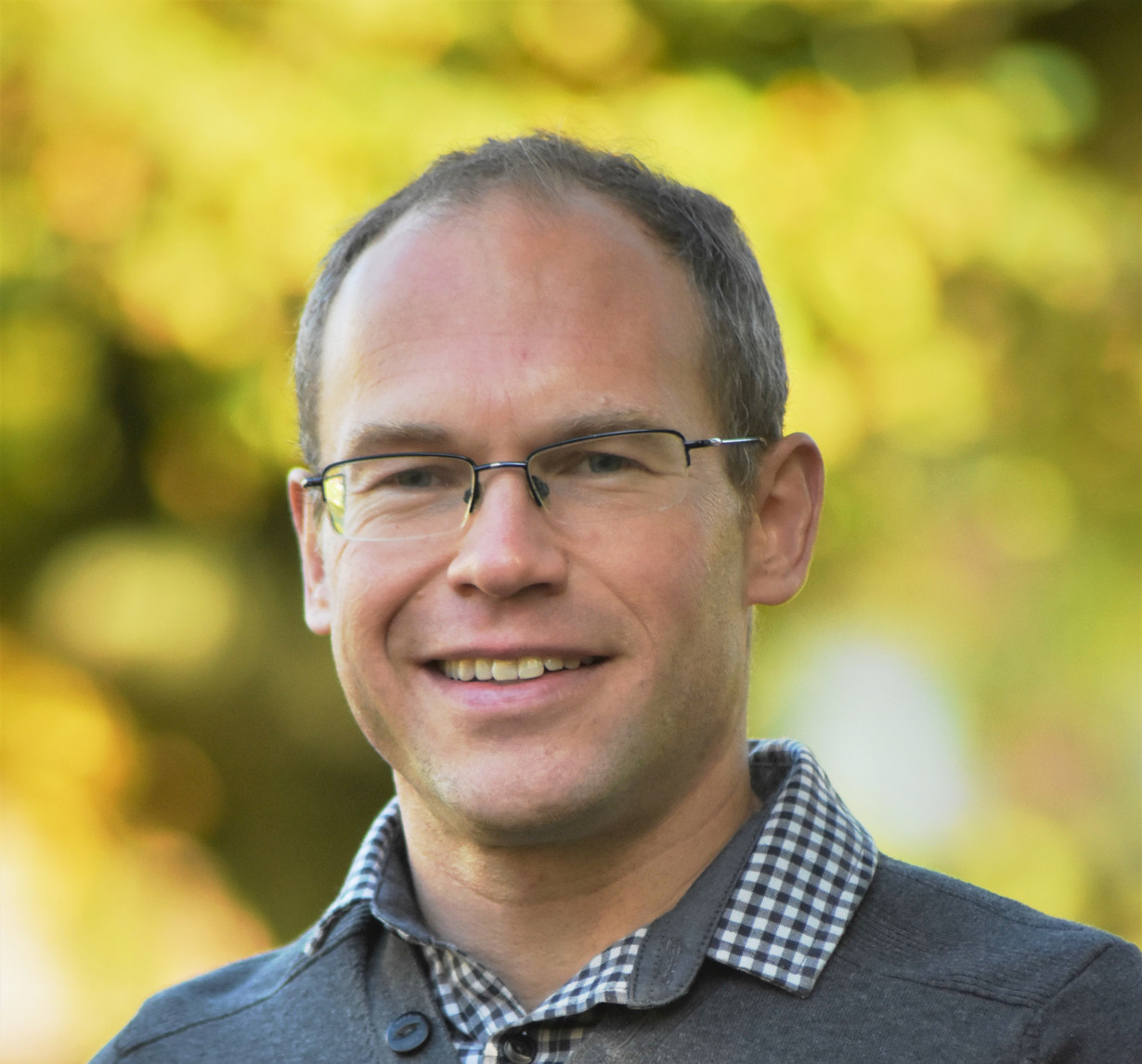
Peter Kraftl is Professor of Human Geography at Loughborough University, UK. An interdisciplinary scholar of childhood, youth and education, his work focuses on children and young people’s interactions with, and learning about, their everyday environments. His work on education has focused on the design and experience of formal, informal, alternative and outdoor learning spaces. Peter has published 11 books and over 120 journal articles and book chapters on the above topics, including the monograph ‘Geographies of Alternative Education’ (Policy Press). He was a coordinating lead author for UNESCO’s International Science and Evidence-based Education Assessment and regularly works with UNESCO, UNICEF, UN-Habitat, WHO and other international and national agencies. He is a Fellow of the Academy of Social Sciences and Royal Society of Arts.
(Re)thinking why matter matters in mainstream and alternative education spaces
There exists abundant evidence about the effects of material learning environments on various aspects of educational experience – from learners’ behaviours and the development of habits, to learning outcomes, socialisation and wellbeing. However, it has also been fairly well-documented that the causal pathways between the material learning environment and desired outcomes are often hard to determine. Material learning environments are mediated and complicated by additional factors, which, importantly, operate at different spatial scales – from educational policy to digital technologies, and from community engagement with educational institutions to the agency of individual learners.
In the context of the above scholarship, this presentation seeks to (re)think why and how matter – understood in the broadest sense – matters in learning environments. Drawing on over two decades of research in both mainstream and alternative learning environments in countries including the UK, Brazil, Canada, South Africa, it aims to juxtapose a range of ways for thinking (again) about how the material environment matters to learning. Conceptually, the paper is based in the author’s broad-ranging engagement with inter-related theories that, together, offer insights into spatial processes in learning environments – including nonrepresentational, feminist new materialist and post-humanist approaches. These approaches emphasise complexity and relationality, and aim to witness aspects of everyday experience that are often overlooked or hard to represent – including bodily performances and habits, emotions and affects, and the entanglement of human with nonhuman forms of agency.
However, these conceptual approaches raise important questions about the extent to which human agents can operate within and control material learning environments – leading to important further (ethical) questions about humans’ responsibility to adequately attend to the role and rights of non-humans. These can be hard questions to grapple with, especially in the often highly-controlled, carefully-designed and -orchestrated and, importantly, indoor environments in which most humans learn (i.e. schools). Yet, by extending analyses to alternative environments such as Forest Schools and Care Farms, other ways to conceptualise matter emerge.
The presentation itself will explore several case studies from both mainstream and alternative educational environments that offer additional provocations and questions for (re)thinking the role of matter in material learning environments. In each case, there will be consideration not only of the specific constellations and micro-geographies of learning environments, but the ways in which these reflect or refract broader social, economic and/or moral imperatives. Examples will include: integrating design and use to create particular kinds of ‘atmospheres’ in the Steiner School kindergarten; intervening at the level of ‘habit’ in Forest Schools and Care Farms through careful choreography of and engagement with ‘natures’; co-producing urban treescapes with children in school grounds; exploring children’s interactions with plastics and metal elements through art and biosampling techniques. Based on these examples, the concluding discussion will outline potential avenues for further research about the role of matter in material learning environments.
Venue Address
Tampere University
City Centre Campus, Main Building
Kalevantie 4
33014 Tampere, Finland

Important Dates ECER 2026
01.12.2025 | Submission starts |
31.01.2026 | Submission ends |
01.04.2026 | Registration starts |
01.04.2026 | Review results announced |
15.05.2026 | Early bird ends |
25.06.2026 | Presentation times announced |
30.06.2026 | Registration Deadline for Presenters |
17.08.2026 | ERC First Day |
18.08.2026 | ECER First Day |
