
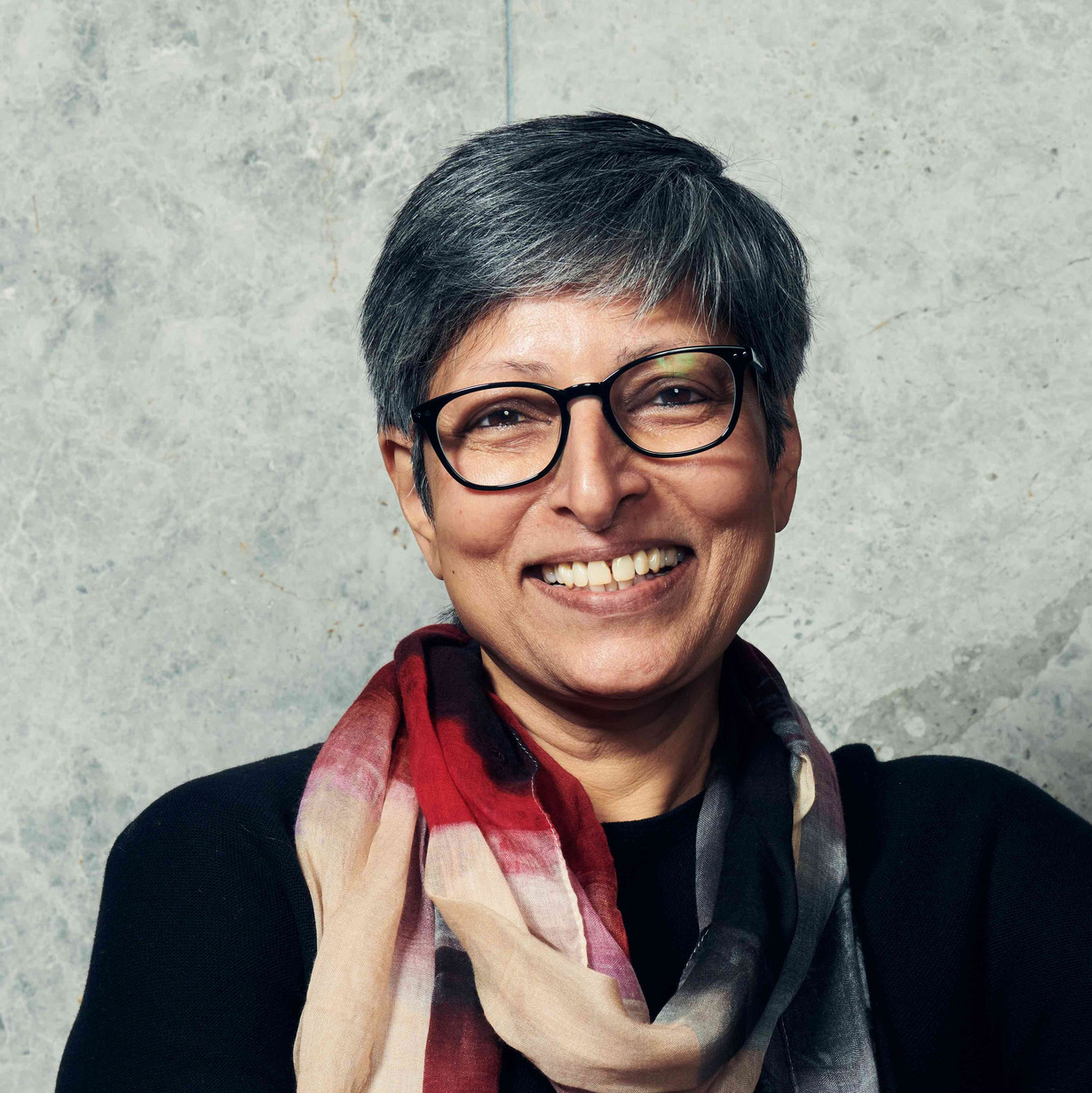
Radhika Gorur is Professor of Education at Deakin University, Australia. She is interested in the social and political lives of data and in how policies get mobilised, stabilised, circulated and challenged. Her research spans education policy and reform; global aid and development in education; data infrastructures and data cultures; accountability and governance; large-scale comparisons; and the sociology of knowledge. Radhika is a founding director of the Laboratory of International Assessment Studies, Deputy Convenor of the Deakin Science and Society Network, and a founding member of the international STudieS network, which is developing the sub-field of Education STS.
Beyond Impact: Responsible Knowing and Acting in Education Research
How can we know and act ethically and responsibly as education researchers? Education research is increasingly expected to demonstrate utility, inform policy, and produce measurable ‘impact.’ Yet not only are these aims difficult to achieve, they also fail to prompt reflection on how research actively shapes the objects, problems and futures of education. This keynote begins with the provocation that education research is never merely descriptive: it is always world-making. If ‘knowing’ and ‘acting’ are co-produced rather than separate activities, what does it mean for education researchers to take responsibility for the worlds they help bring into being?
Drawing on Jasanoff, Stengers, Dewey, Haraway, Latour and recent work on responsible research and innovation, I explore key issues of partiality, legitimacy and utility in research. To demonstrate the ontological politics of knowledge-making, I focus on the methods, metrics and data infrastructures that organise contemporary education systems—from international comparisons to predictive analytics—showing how they configure what becomes visible, actionable and governable, while excluding other possibilities. Turning the critical gaze to our own practices, I argue that attending to the epistemic, material and institutional conditions of research allows us to understand responsibility not as compliance with external demands, nor as the production of impact, but as the cultivation of reflexivity about the effects and exclusions of our knowledge-making.
In a climate hungry for certainty, I argue for staying with the trouble and defending space for thinking and acting beyond narrow notions of impact. Understanding research as a collective endeavour shaped by civic epistemologies, informed publics and heterogeneous assemblages, I call for approaches that open up: slowing judgment, foregrounding uncertainty, inviting alternative perspectives, and making space for questions that do not necessarily fit prevailing frames. Responsibility, in this sense, becomes a mode of inquiry—a commitment not only to examining how we know, what we enact, and what possibilities we enable or foreclose, but also to considering ‘how we go on together.’
Venue Address
Tampere University
City Centre Campus, Main Building
Kalevantie 4
33014 Tampere, Finland

Important Dates ECER 2026
01.12.2025 | Submission starts |
31.01.2026 | Submission ends |
01.04.2026 | Registration starts |
01.04.2026 | Review results announced |
15.05.2026 | Early bird ends |
25.06.2026 | Presentation times announced |
30.06.2026 | Registration Deadline for Presenters |
17.08.2026 | ERC First Day |
18.08.2026 | ECER First Day |
