
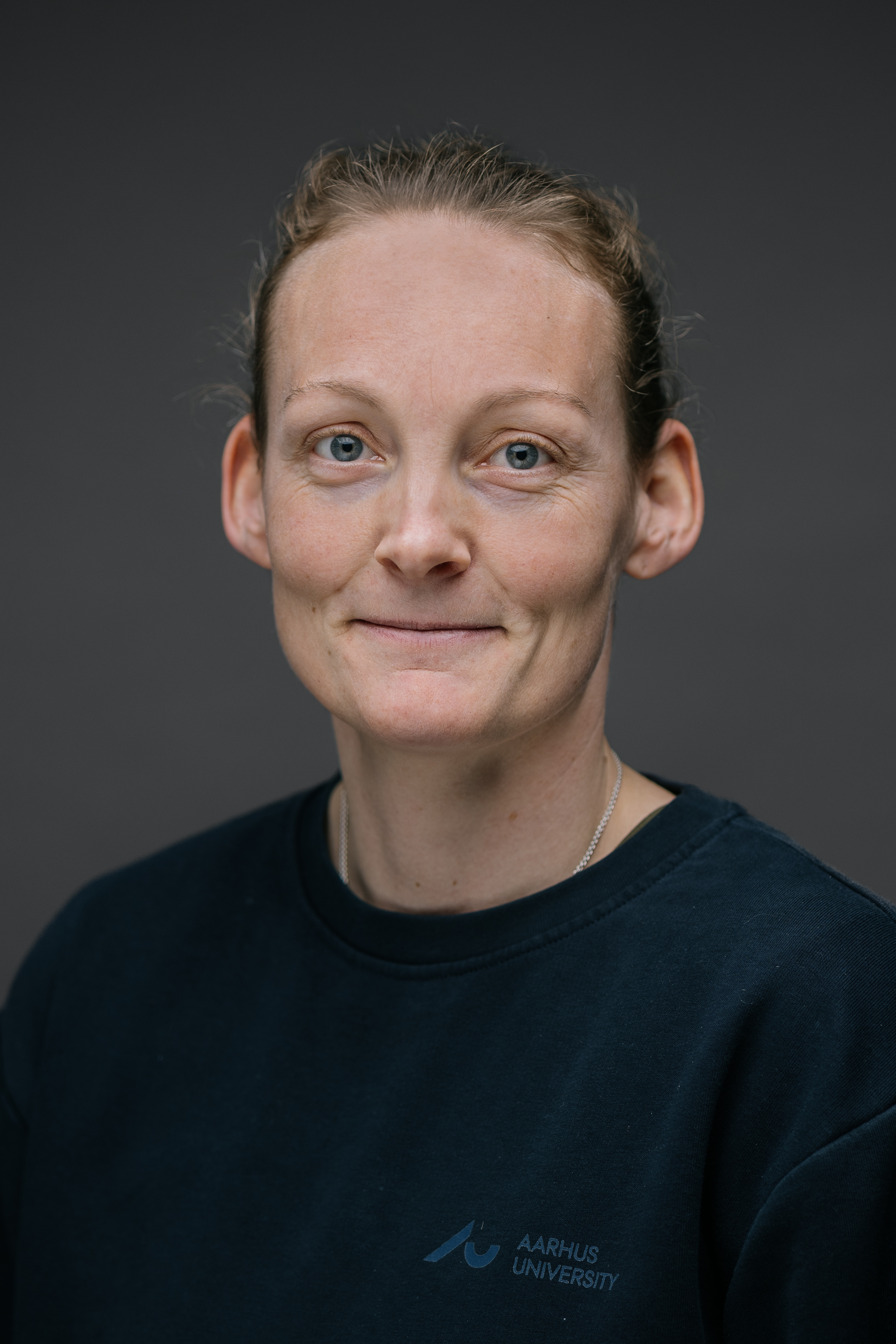
Sine Lysdahl Jensen is a PhD student at Danish School of Education (DPU), Aarhus University, Denmark.
Her research focuses on inclusion in higher education, with a particular interest in how students with mental health disabilities navigate educational institutions bodily and emotionally, and how they are affected by places, spaces, and materiality within higher education.
She holds an MSc in Educational Anthropology from Aarhus University (2021–2024) and a bachelor’s degree in social education (trained pedagogue) from VIA University College (2016–2020).
Sine explains: “I work ethnographically, using methods such as go-along interviews and participant observation, and my research is phenomenologically informed. My research interests include inclusion in higher education, the inclusion of students with hidden disabilities, mental vulnerability, students with affective disorders, and how students navigate institutional spaces. More specifically, I am interested in how students' encounters with the physical environment of universities shape their sense of belonging and emotional experiences, and how university spaces and places influence students' experiences of mental vulnerability.”
You can view Sine's poster here.
“The Tacit Dimension of Navigating Higher Education with Affective Disorders”
This project investigates how students with affective disorders (ICD-10, 2019; WHO, 2024) navigate higher education, focusing on the interplay between body, physical environment, and emotions. The increasing number of students with mental disorders highlights the need to rethink the design of learning environments that foster both inclusion and academic development.
Global estimates from the World Health Organization (2022) and the United Nations (2025) indicate that over 1.3 billion people - 16% of the world’s population - experience significant disability, resulting from interactions between individuals and environmental factors (WHO, 2022; WHO, 2026). Despite being the world’s largest minority, this population faces persistent barriers and exclusion, particularly in education and broader societal participation (CRPD, 2006). Studies have emphasized that educational environments are primarily developed for students with “neurotypical” development, potentially excluding students with mental disorders (Horlin et al., 2024).
In Denmark, one in five students (19%) report having a disability, over half (56%) indicate that their disability is related to mental health (EVA, 2023). By examining how students with affective disorders -from two Danish universities - navigate the physical and social spaces of higher education through embodied and embedded strategies, this project illuminates’ students’ tacit, embodied knowledge and adaptive practices, offering insights for promoting inclusive learning environments.
Tacit knowledge (Polanyi, 1967) is understood as knowledge carried in the body and in actions (Adloff et al., 2015). Embodied strategies are conceptualized phenomenologically, following Merleau-Ponty (1945/2012), as the ways this knowledge is lived, felt, and enacted through the body’s intentional engagement with the world. Embedded strategies, analyzed through a space-and-place lens (Tuan, 1977), describe how tacit and bodily knowledge is shaped by and enacted within specific social and material environments (Schrijver, 2021), where characteristics of spaces, places, and institutional settings influence possibilities for action, experience, and emotional engagement. To explore essential forms of tacit knowledge among students with affective disorders in higher education, this study raises three analytical questions:
What embodied and embedded strategies do students with affective disorders use to navigate higher education?
What role does the body play in the inclusion of these students?
How does the physical environment affect their inclusion?
Subjective experiences must be carefully considered to understand the neural bases of human behavior (Fuchs & Schlimme, 2009). Studies highlight the importance of understanding individuals through their lived experiences and bodily constructions, suggesting that “embodiment” is emerging as a major paradigm in psychopathology (Ratcliffe, 2008, 2023; Stanghellini, 2004). Embodied approaches emphasize the circular interaction of altered subjective experiences (Ratcliffe, 2015). Guided by phenomenology (Fuchs, 2021, 2023; Fuchs & Koch, 2014; Fuchs et al., 2009; Merleau-Ponty, 1945/2012) and spatial theory (Tuan, 1974, 1977), this project aims to:
Investigate the role of the body in shaping strategies for managing academic, social, and emotional challenges.
Analyze how bodily, emotional, and spatial interactions can exacerbate or alleviate the effects of affective disorders on learning and participation.
Generate insights to inform more inclusive educational practices and the design of learning environments supporting students with affective disorders.